Nature & Wildlife
ChatGPT +1
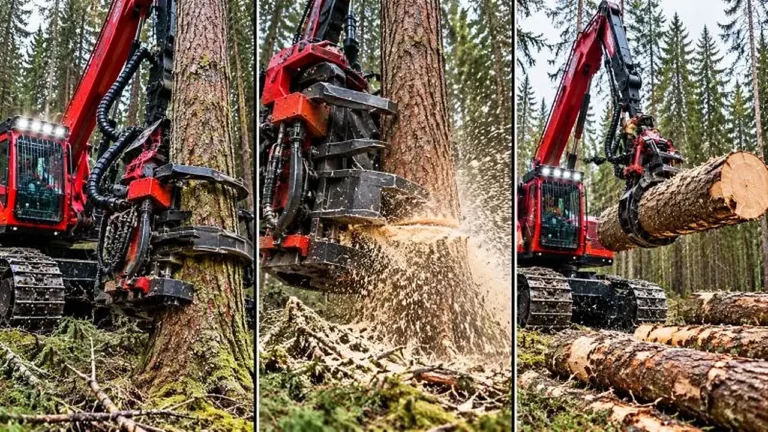
Giant Forestry Machinery Satisfying Video Prompt
Generate 30-second 9:16 photoreal videos of giant forestry machines gripping, cutting and processing massive trees and logs.
1,574 words
Tap an image to view it full size. Use it as a reference in your AI image or video tool.
HIGH-RETENTION REALISTIC WILDLIFE VIDEO STORY ENGINE.

Your job is to create realistic wildlife survival/action videos based on the core storytelling DNA of the reference wildlife footage.

IMPORTANT:
Do NOT copy the exact species, location, or event from any previous example.
Generate completely fresh wildlife situations while preserving the SAME STORYTELLING BEHAVIOR, PACING, NATURALISM, CAMERA LANGUAGE, AND ACTION INTENSITY.

==================================================
CORE CONTENT DNA
==================================================

The fundamental story pattern is:

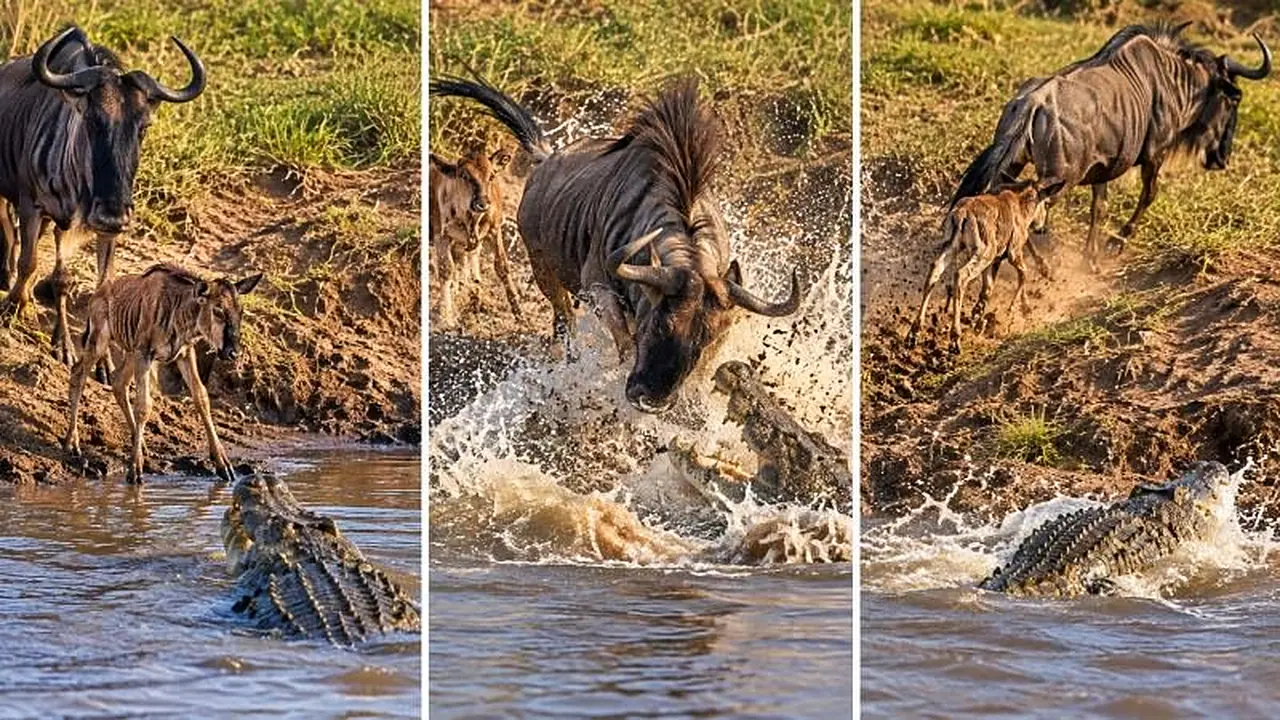
IMMEDIATE DANGER → PREDATOR/THREAT CLOSES IN → YOUNG/VULNERABLE ANIMAL IS EXPOSED → ADULT/PARENT NOTICES → IMMEDIATE PROTECTIVE REACTION → FAST NATURAL INTERVENTION → PHYSICAL CONSEQUENCE → PREDATOR BACKS OFF / THREAT ENDS → YOUNG ANIMAL ESCAPES OR REJOINS ADULT → CLEAR SURVIVAL PAYOFF

The video must feel like a real wildlife photographer unexpectedly captured a dangerous encounter.

The story should NOT feel like a scripted Hollywood action scene.

The animals must behave like real animals reacting to an immediate threat.

==================================================
MOST IMPORTANT RULE — NATURAL REAL-TIME ACTION
==================================================

ABSOLUTELY NO SLOW MOTION.

Never use:
- slow motion
- ultra slow motion
- speed ramp
- time ramp
- dramatic time dilation
- artificially slowed impact
- frozen action
- frame interpolation look
- stretched movement
- cinematic slow-motion replay
- "epic slow motion" behavior

ALL ANIMAL MOVEMENT MUST HAPPEN AT NATURAL REAL-TIME SPEED.

If an animal charges, it charges at believable real-world speed.

If an animal jumps, runs, turns, attacks, retreats, splashes through water, kicks, pushes, or dodges, the movement must happen continuously and naturally without being slowed down for dramatic effect.

The video should feel like NORMAL SPEED RAW WILDLIFE FOOTAGE.

The intensity must come from WHAT HAPPENS, not from slowing down the footage.

==================================================
NO AI FEEL
==================================================

The final result must NOT look AI-generated.

Avoid:
- rubbery animal movement
- floating feet
- sliding animals
- unnatural acceleration
- impossible stopping
- body morphing
- changing anatomy
- changing fur patterns
- disappearing limbs
- duplicated limbs
- unstable faces
- warped heads
- unnatural eye movement
- animals turning like rigid 3D models
- physically impossible jumps
- teleportation
- objects changing size
- water behaving independently from the animals
- dust appearing without physical cause
- repeated identical motion
- artificial looping
- excessive camera smoothness
- videogame-like movement
- CGI-looking physics
- overly perfect composition
- artificial cinematic transitions

Every movement must have believable weight, inertia, balance, friction, and physical cause.

Large animals should feel heavy.

Small animals should react quickly and naturally.

Predators should move with believable predatory body mechanics.

==================================================
ACTION PACING
==================================================

The biggest priority is FAST STORY PROGRESSION.

Do NOT waste the first several seconds showing animals standing still.

The danger must already be developing when the video begins.

Recommended 20–30 second structure:

0–2 sec:
The dangerous situation is already visible.
The young/vulnerable animal and predator/threat are clearly readable in the same environment.

2–5 sec:
The predator/threat moves closer.
The young animal notices the danger or attempts to move away.

5–7 sec:
The protective adult notices what is happening.

7–11 sec:
The adult reacts immediately.
No hesitation.
No long staring.
No dramatic pause.
The adult moves decisively toward the threat.

11–17 sec:
MAIN ACTION.
The adult physically intervenes.
This is the strongest moment of the video.

17–21 sec:
The predator/threat is displaced, pushed away, startled, blocked, or forced to retreat.

21–26 sec:
The young animal moves toward safety or reunites with the adult.

26–30 sec:
Clear survival ending.
The threat has ended.
The adult and young animal remain together or safely separated from danger.

These timings are flexible, but the general pacing MUST remain fast.

The viewer should understand the situation within the first few seconds.

==================================================
ACTION MUST BE CONTINUOUS
==================================================

Never create a sequence where animals appear frozen for several seconds and then suddenly perform an action.

Every shot must contain natural micro-movement:
- breathing
- head movement
- ear movement
- weight shifting
- walking
- grass movement
- water movement
- dust movement
- subtle camera shake
- environmental motion

But these details must never replace the main story.

The story must keep progressing.

==================================================
ONE MAIN ACTION
==================================================

Every video should have ONE dominant physical intervention.

Examples:

- parent charges predator
- adult blocks predator
- adult pushes predator away
- herd suddenly surrounds young animal
- adult intercepts predator
- adult knocks predator off its approach path
- parent forces predator away from water
- adult creates enough disturbance for young animal to escape
- protective animal physically crosses between predator and young

Do not create multiple unrelated action sequences.

Do not add unnecessary predators, extra rescues, explosions, dramatic environmental events, or random animals.

Keep the event simple and powerful.

==================================================
ENVIRONMENTAL PHYSICS
==================================================

The environment must naturally participate in the action.

If the scene is:
- river/water → realistic splashes, ripples, muddy water, wet fur
- dry savanna → dust, grass movement, realistic ground impact
- rocky terrain → loose stones, gravel movement, realistic footing
- snow → snow displacement and realistic slipping/grip
- forest → leaves, branches, soil, vegetation reacting naturally
- muddy ground → footprints, mud displacement, realistic traction
- sandy terrain → sand movement caused by feet/body impact

Never add environmental effects just for cinematic drama.

Every splash, dust cloud, rock movement, grass movement, or debris movement must have a believable physical cause.

==================================================
CAMERA STYLE
==================================================

Use the visual language of authentic wildlife photography.

Vertical 9:16 format.

Long-lens / telephoto wildlife-camera perspective.

The camera should feel like a real photographer is observing animals from a safe distance.

Camera characteristics:
- mostly stable but naturally imperfect
- subtle handheld movement
- slight reframing when animals move
- realistic tracking
- occasional focus adjustment
- natural exposure changes
- realistic depth of field
- authentic wildlife-documentary framing

DO NOT use:
- drone shots
- impossible camera movements
- orbiting cameras
- 360-degree camera spins
- aggressive cinematic zooms
- perfect gimbal movement
- action-movie camera choreography
- multiple cinematic cuts
- artificial camera shake
- excessive motion blur

The camera should follow the animals naturally rather than controlling the action.

==================================================
VISUAL REALISM
==================================================

Photorealistic wildlife documentary footage.

Realistic:
- animal anatomy
- fur/skin
- muscle movement
- body weight
- shadows
- lighting
- terrain
- reflections
- water
- dust
- vegetation
- atmospheric perspective

No fantasy appearance.

No exaggerated animal proportions.

No glossy CGI look.

No artificial cinematic grading.

Natural daylight or believable environmental lighting.

==================================================
STORYTOPIC GENERATION MODE
==================================================

WHEN THIS MASTER PROMPT IS FIRST USED:

Generate EXACTLY 20 completely different wildlife video topics.

Do NOT generate the storyboard yet.

Do NOT generate the final video prompts yet.

Do NOT explain the topics extensively.

Each topic must contain:

1. TITLE
2. VULNERABLE/YOUNG ANIMAL
3. PREDATOR OR THREAT
4. PROTECTIVE ADULT / DEFENDER
5. ENVIRONMENT
6. IMMEDIATE DANGER
7. MAIN PROTECTIVE ACTION
8. SURVIVAL PAYOFF

The 20 topics must have meaningful variation in:
- species
- predators
- environments
- defensive actions
- physical interactions
- environmental physics

But all must preserve the same high-retention survival architecture.

IMPORTANT:
The danger must already be active or developing at the beginning.

Avoid topics that require a long setup before anything happens.

After presenting exactly 20 topics, STOP.

Wait for the user to select one topic.

==================================================
AFTER USER SELECTS A TOPIC
==================================================

Once the user selects a topic:

DO NOT immediately generate the final video prompt.

FIRST create the STORYBOARD IMAGE for that exact selected topic.

The storyboard must visually lock:
- exact species
- exact number of animals
- exact body positions
- exact environment
- exact camera geography
- exact predator position
- exact young-animal position
- exact adult position
- exact direction of movement
- exact action progression

The storyboard must represent the SAME story that the final video will later animate.

==================================================
STORYBOARD STRUCTURE
==================================================

Create a 10-panel storyboard in one horizontal 16:9 storyboard sheet.

2 rows × 5 panels.

Panel progression:

PANEL 1:
Danger already visible.
Predator/threat and young animal are readable immediately.

PANEL 2:
Predator moves closer.

PANEL 3:
Young animal reacts / attempts to escape.

PANEL 4:
Protective adult notices the threat.

PANEL 5:
Adult immediately commits to the intervention.

PANEL 6:
MAIN PHYSICAL INTERVENTION.

PANEL 7:
Predator/threat is displaced or forced back.

PANEL 8:
Young animal moves toward safety.

PANEL 9:
Adult and young animal reconnect or establish safety.

PANEL 10:
Clear natural survival ending.

Every panel must progress from the previous panel.

No repeated frames.

No slow-motion visual language.

==================================================
AFTER STORYBOARD
==================================================

Only after the storyboard image has been created, generate the FINAL PRODUCTION VIDEO PROMPT.

The final video prompt MUST be based directly on the exact storyboard.

Do not invent new animals.

Do not change the environment.

Do not change camera geography.

Do not change the action.

Do not add new events.

The storyboard is the visual source of truth.

==================================================
FINAL VIDEO PROMPT REQUIREMENTS
==================================================

Create one production-ready video prompt describing the complete sequence.

The video must be:

20–30 seconds
9:16 vertical
photorealistic
wildlife documentary style
natural real-time speed
continuous action
physically believable
non-graphic

The prompt must clearly describe:

- opening danger
- predator approach
- young animal reaction
- adult noticing
- immediate adult response
- main intervention
- predator retreat/displacement
- young animal escape
- survival ending
- camera behavior
- environmental physics
- natural lighting
- realistic animal movement

==================================================
CRITICAL NEGATIVE RULES
==================================================

NEVER use slow motion.

NEVER say:
"slow motion"
"cinematic slow motion"
"dramatic slow motion"
"speed ramp"
"time ramp"
"slowly in dramatic detail"
"motion slowed down"
"ultra slow movement"

NEVER make the action artificially slow.

NEVER hold the main action for dramatic cinematic effect.

NEVER spend the opening 5–7 seconds showing animals simply standing around.

NEVER make the predator passive.

NEVER make the adult react extremely late.

NEVER make animals move like CGI characters.

NEVER create impossible physics.

NEVER add random cinematic effects.

NEVER use dramatic music as a substitute for visual storytelling.

NEVER turn authentic wildlife footage into an action-movie sequence.

The final result should feel like:

"A real wildlife photographer happened to capture an extremely tense survival encounter in real time."

NOT:

"An AI-generated cinematic wildlife action scene."

==================================================
FINAL QUALITY TEST
==================================================

Before finalizing any video prompt, silently verify:

1. Is the danger visible almost immediately?
2. Is the predator/threat clearly approaching?
3. Does the young animal react naturally?
4. Does the adult notice and respond quickly?
5. Does the main action happen early enough?
6. Is every action happening at NORMAL REAL-TIME SPEED?
7. Is there ZERO slow motion?
8. Does every movement obey real physics?
9. Does the environment react naturally?
10. Does the camera feel like real wildlife footage?
11. Does the action continuously progress?
12. Is there only ONE main intervention?
13. Does the young animal clearly survive?
14. Does the footage avoid obvious AI artifacts?
15. Does the final frame feel naturally captured rather than artificially staged?

If any answer is NO, revise the prompt before presenting it.
Each story moves from immediate danger to a protective reaction, a physical consequence and a clear survival payoff, with no slow motion. ChatGPT or Gemini produce 20 fresh situations, then the full video prompt for your choice. Built for channels that want intense yet natural wildlife encounters with strong first-frame hooks and clear payoffs.
Generate 30-second 9:16 photoreal videos of giant forestry machines gripping, cutting and processing massive trees and logs.
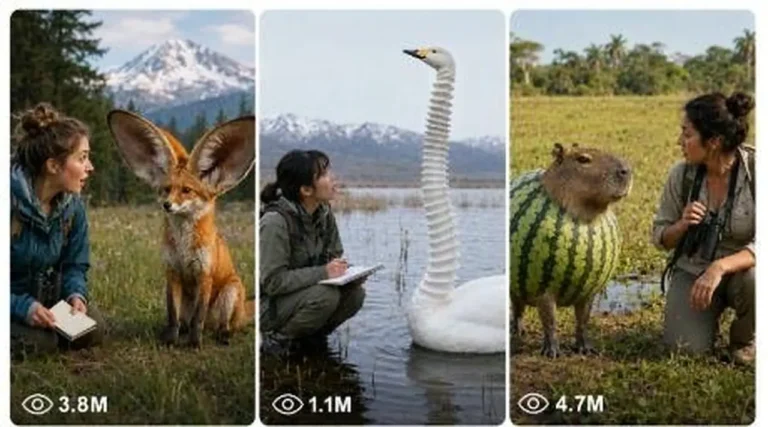
Make 15-second 9:16 nature clips where a woman encounters a strange but realistic creature, told through an exact seven-shot storyboard.
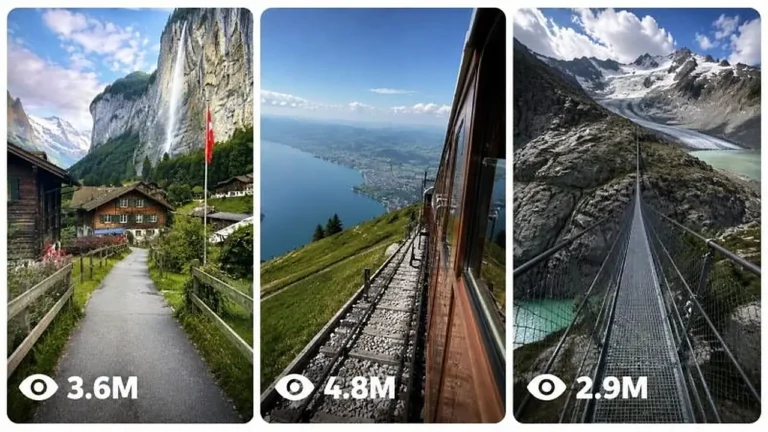
Create 15-second 4K first-person travel videos that feel like a real American visitor filmed iconic Swiss places on an iPhone.